
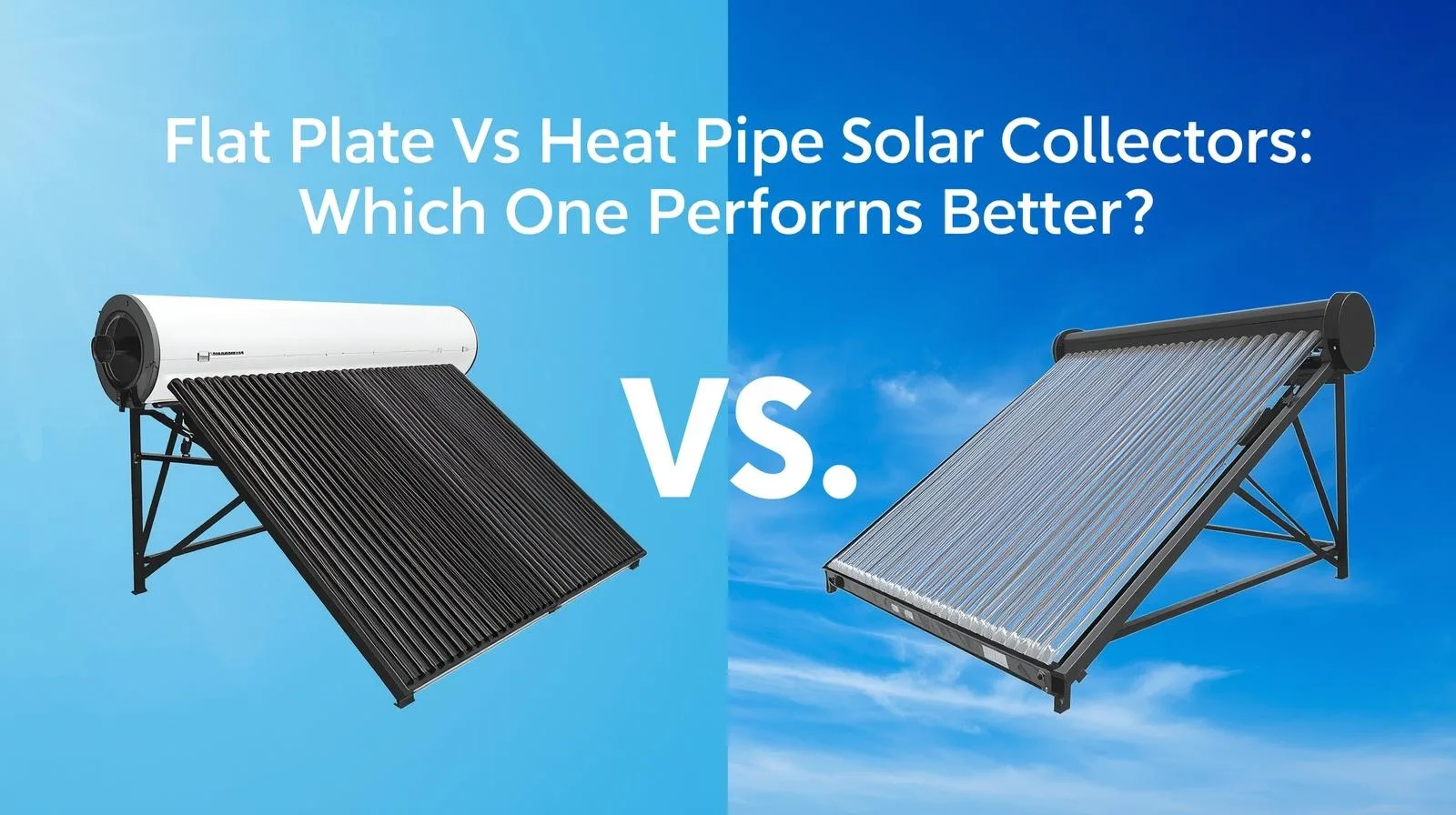
Solar thermal technology has evolved significantly over the last two decades. Among the most widely adopted solutions for domestic, commercial, and industrial hot water systems are flat plate solar collectors and heat pipe solar collectors. Both these systems convert solar radiation into usable thermal energy, their design principles, performance behavior, and efficiency under varying conditions differ substantially.
In this article, we provides a detailed performance comparison between flat plate and heat pipe solar collectors. Our goal is to help homeowners, system installers, and B2B buyers determine the most suitable solar collector for various operating conditions. This allows them to make well-informed and practical purchasing decisions.
What is a Flat Plate Solar Collector?

A flat plate solar collector is a common solar device. It turns sunlight into heat for water. Its design is simple, durable, and cost-effective. That’s why it’s popular in homes, small businesses, and light industrial use.
It has a dark absorber plate, a transparent glass or polymer cover, and insulation at the back to reduce heat loss. Flat plate collectors work best in sunny regions with stable temperatures. They use insulation instead of a vacuum, so they are easier to maintain and more affordable.
How Does a Flat Plate Solar Collector Work?
Flat plate solar collectors operate on a simple principle. They absorb sunlight and transfer the heat to a fluid that flows through pipes attached to the absorber plate.
Here’s how the process works step by step:
- Sunlight passes through the transparent cover and strikes the dark absorber plate.
- The absorber plate heats up and converts solar energy into thermal energy.
- Fluid flows through tubes attached to the plate and absorbs the heat.
- Heated fluid is pumped or circulated to a storage tank for domestic or commercial use.
- Insulation and the transparent cover minimize heat loss, maintaining efficiency.
This direct method of transferring heat is simple and works well. It makes flat plate collectors reliable in warm areas and for moderate water temperatures.
Read More: Outdoor Electric Heater for Home & Commercial Use
Key Features of a Flat Plate Solar Collector
Flat plate collectors are simple and durable. They absorb sunlight directly. They work best in warm and sunny regions.
- Simple Construction: Easy to manufacture and install.
- Durable Materials: Absorber plates typically made of copper or aluminum; strong glass cover.
- Non-Evacuated System: Uses insulation rather than vacuum to reduce heat loss.
- Moderate Efficiency: Performs well in sunny and moderately cold conditions.
- Wide Application: Suitable for homes, small businesses, and commercial water heating systems.
Advantages and Disadvantages of Flat Plate Solar Collector
Flat plate collectors are affordable. They last long and need little maintenance. Efficiency drops in cold or cloudy weather.
Advantages
- Lower initial cost compared to heat pipe or evacuated tube systems.
- Durable and long-lasting, with a lifespan of 20–25 years.
- Simple installation and maintenance.
- Reliable performance in warm and temperate climates.
Disadvantages
- Efficiency drops significantly in cold, windy, or cloudy conditions.
- Cannot achieve very high water temperatures compared to heat pipe systems.
- Larger roof space may be required for the same output.
- Not ideal for extreme climates or high-demand commercial applications.
Read More: High-Efficiency Solar Water Heater For Home
What is a Heat Pipe Solar Collector?

A heat pipe solar collector is a type of evacuated tube system. It uses a sealed tube with a working fluid to transfer heat from sunlight to water or another fluid efficiently. Unlike flat plate collectors, it has vacuum insulation, which cuts heat loss and keeps efficiency high, even in cold or cloudy weather.
Each tube has a small sealed metal pipe filled with fluid. When heated, the fluid turns to vapor and rises to the top. There, it transfers heat to the manifold, condenses, and flows back down to repeat the cycle. This design helps heat pipe collectors work well in low temperatures and provide consistent heat throughout the year.
How Does a Heat Pipe Solar Collector Work?
Heat pipe solar collectors work on a phase-change principle. The fluid inside each tube evaporates and condenses to transfer heat. The process works like this:
- Sunlight strikes the evacuated tube, heating the heat pipe inside.
- The working fluid inside the pipe evaporates, carrying heat upwards.
- Vapor reaches the condenser at the top, where heat is transferred to the water or glycol circulating in the manifold.
- The fluid condenses and flows back down to the bottom of the tube.
- The cycle repeats continuously, efficiently transferring heat even under low sunlight or cold conditions.
The vacuum around the tube acts as insulation. It reduces heat loss and keeps the energy output steady.
Read More: Solar Water Heating System for Homes & Businesses
Key Features of a Heat Pipe Solar Collector
Heat pipe solar collectors are highly efficient. They keep heat loss low. They work well in cold and cloudy weather.
- Evacuated Tube Design: Superior insulation reduces heat loss.
- Phase-Change Heat Transfer: Efficiently transfers heat via working fluid vaporization.
- High Temperature Capability: Can reach higher water temperatures than flat plate collectors.
- Modular Design: Individual tubes can be replaced without affecting the entire system.
- Cold Climate Efficiency: Performs well even in winter, cloudy, or windy conditions.
Advantages and Disadvantages of a Heat Pipe Solar Collector
Heat pipe solar collectors heat water fast. They are easy to maintain. Costs are higher. Tubes may need replacement sometimes.
Advantages
- High efficiency across all weather conditions, including cold and low sunlight.
- Capable of producing higher water temperatures.
- Modular tube design allows easy maintenance and partial replacement.
- Compact and lightweight compared to flat plate systems.
Disadvantages
- Higher upfront cost compared to flat plate collectors.
- Slightly more complex installation due to manifold and tube connections.
- Individual tube failure may occur, requiring occasional maintenance.
- Not always cost-effective in warm, sunny regions where flat plate collectors suffice.
How to Maintain and Take Care of Solar Collectors?
Proper care of your solar collectors keeps them efficient and extends their lifespan. With simple maintenance, you can avoid common problems and ensure consistent hot water output.
- Clean the surface regularly: Remove dust, dirt, and debris from glass or tubes.
- Check for leaks: Inspect pipes, joints, and connections for any signs of damage.
- Monitor fluid levels: Ensure the circulating fluid (if used) is at the correct level.
- Inspect insulation: Look for worn or damaged insulation on pipes and panels.
- Seasonal check-ups: After storms, snow, or heavy rain, make sure everything is functioning properly.
How to Properly Install Solar Collectors?
Correct installation is crucial for solar collectors to work efficiently and last longer. Following simple tips ensures maximum sunlight exposure, safety, and long-term performance.
- Choose the right location: Place collectors where they get direct sunlight for most of the day.
- Check roof strength: Make sure the roof can support the weight of flat plate or heat pipe collectors.
- Proper tilt and angle: Adjust the angle according to your region’s latitude for optimal solar absorption.
- Secure mounting: Use strong brackets and fasteners to keep collectors stable during wind or storms.
- Connect pipes carefully: Ensure all fluid connections are leak-free and insulated properly.
Step-by-Step Buying Guide of Solar Collector
Choosing the right solar collector can be tricky. This step-by-step guide makes it simple. It helps you pick a system that fits your water needs, climate, and budget.
1: Determine Your Hot Water Needs
Estimate how much hot water you use daily. Include all users, appliances, and peak demand times to size the system correctly.
2: Choose the Right Type
Decide between flat plate and heat pipe collectors. Consider your climate, budget, and whether you need higher efficiency in cold or cloudy weather.
3: Check Quality and Materials
Look for strong absorber plates, durable glass or tubes, and well-insulated panels. Good materials last longer and maintain performance over time.
4: Consider System Size
Select a collector size that meets your daily hot water demand. Make sure it fits the available roof or installation space comfortably.
5: Compare Brands and Warranties
Research multiple suppliers and compare their after-sales support. Check warranty periods and customer reviews to ensure reliability.
Final Thoughts
Choosing the right solar collector depends on your specific needs, climate, and budget. Understanding the strengths and limitations of each system helps homeowners, installers, and businesses make informed decisions.
At Riwatt Solar Co., Ltd, we provide high-quality solar collectors and professional guidance to help you select the best solution for your project. Contact us today to find the perfect solar collector for your needs and start saving energy efficiently.
Leave A Comment
Your email address will not be published.