
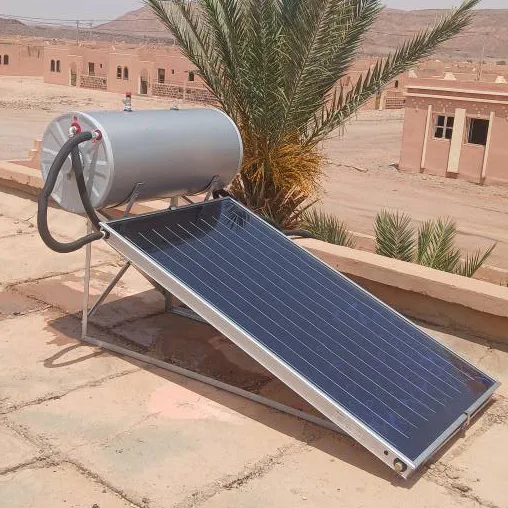
As fuel costs continue to rise, industries face increasing pressure to control energy expenses. An industrial solar water heater system is a high-capacity thermal solution designed for large-scale operations. It delivers reliable and cost-efficient hot water on a continuous basis. These systems are widely used in manufacturing plants, hotels, hospitals, and large commercial complexes.
Today, our team will explain what an industrial solar water heater system is and how it works in large scale environments. We will cover its working principle, key components, and system configurations. This will help readers clearly understand system design before moving to applications and benefits.
What is an Industrial Solar Water Heater System?

An industrial solar water heater system converts solar radiation into usable thermal energy to heat large volumes of water. These systems are specifically engineered for high-flow rates, elevated operating temperatures, and continuous usage cycles.
Unlike small-scale installations, industrial systems often integrate:
- Advanced collector arrays
- Pressurized circulation loops
- High-capacity insulated storage tanks
- Intelligent control and monitoring units
The result is a stable hot water supply that significantly reduces dependence on fossil fuels or grid electricity.
Working Principle of Industrial Solar Water Heating

Industrial solar water heating follows a controlled thermal process optimized for large-scale demand:
- Solar collectors absorb radiation and convert it into heat.
- Thermal energy is transferred to water or a heat-transfer fluid.
- Heated water is stored in insulated tanks to prevent heat loss.
- Hot water is distributed to industrial processes through controlled piping.
- Auxiliary heating supports the system during low solar availability.
At Riwatt Solar Co., Ltd., system designs prioritize maximum solar utilization without compromising operational continuity.
Key Components of an Industrial Solar Water Heater System
Solar Collectors
Industrial systems typically use:
- Evacuated Tube Collectors (ETC) for high-temperature performance
- Flat Plate Collectors (FPC) for durability and large-area installations
These collectors are optimized for industrial rooftops, ground-mounted arrays, or structural frames.
High-Capacity Storage Tanks
Storage tanks are designed for:
- Large water volumes (500 liters to several thousand liters)
- Multi-layer insulation to minimize heat loss
Corrosion-resistant linings for long operational life
Heat Exchangers
Heat exchangers isolate process water from collector loops, ensuring:
- Improved safety
- System longevity
Compatibility with industrial fluids
Circulation Pumps and Piping
Industrial-grade pumps ensure consistent flow across long distances, while insulated piping minimizes thermal losses.
Control and Monitoring Systems
Smart controllers regulate temperature, pressure, and flow rates. Modern systems can integrate with Building Management Systems (BMS) for centralized monitoring.
Read More: Advanced Solar Heated Water Heater Solutions
Types of Industrial Solar Water Heater Systems
Industrial systems are configured based on application and environmental conditions.
Pressurized Systems
Used where constant water pressure is required, such as hotels, hospitals, and food processing facilities.
Non-Pressurized Systems
Suitable for batch-based operations including textile processing and industrial washing.
Direct Circulation Systems
Water circulates directly through collectors and is suitable for warm climates with low freezing risk.
Indirect Circulation Systems
A heat-transfer fluid prevents freezing and scale formation, making it ideal for cold climates and high-temperature applications.
Industrial Applications of Solar Water Heater Systems
Industrial solar water heaters support continuous thermal demand across sectors. They improve efficiency, reduce energy costs, and stabilize industrial operations. Adoption increases as industries prioritize sustainability, reliability, and long-term performance.
- Manufacturing Plants: Provides process water heating for continuous production operations. Reduces boiler load and stabilizes energy consumption levels.
- Hotels and Hospitality: Supports large-volume hot water demand for guest services. Improves operational efficiency while lowering long-term heating costs.
- Hospitals and Healthcare: Ensures reliable hot water for sanitation and hygiene. Supports compliance with strict healthcare safety temperature standards.
- Food Processing Industry: Supplies heated water for cleaning, processing, and sanitation. Maintains consistent temperatures required for food safety protocols.
- Textile and Garment Industry: Used for washing, dyeing, and fabric finishing processes. Delivers stable thermal output during extended production cycles.
Read More: Best Solar Water Heater Solutions
Advantages of Industrial Solar Water Heater Systems
1: Significant Energy Cost Reduction
Solar thermal systems can reduce water heating energy costs by 50–80%, depending on system size and solar availability.
2: High Return on Investment (ROI)
Despite higher upfront costs, industrial systems often achieve payback within 2–4 years, making them financially attractive.
3: Environmental Compliance
Solar water heating helps industries:
- Reduce carbon emissions
- Meet sustainability targets
- Comply with environmental regulations
4: Operational Reliability
With fewer moving parts than conventional boilers, solar thermal systems offer long-term operational stability.
5: Scalability
Systems can be expanded as industrial demand grows, ensuring long-term adaptability.
Design Considerations for Industrial Systems
Designing an effective industrial solar water heater system requires careful technical evaluation:
- Daily hot water demand (liters/day)
- Required operating temperature
- Available installation area
- Local solar radiation levels
- Backup heating integration
- Water quality and treatment requirements
A properly engineered system ensures maximum efficiency and minimal downtime.
Installation and Integration Process

Industrial solar water heater systems require a systematic installation process to ensure efficiency, safety, and long service life. The steps below summarize the workflow:
| Step | Description |
| Site Assessment & Feasibility Study | Evaluate available space, solar exposure, and facility requirements. |
| Thermal Load Calculation | Determine daily hot water demand and temperature needs. |
| Collector & Tank Sizing | Size collectors and storage tanks based on thermal load. |
| Structural & Piping Design | Plan support structures and piping layout for efficiency. |
| Plan support structures and piping layout for efficiency. | Assemble components and integrate system into facility. |
| Performance Testing & Optimization | Test operation and fine-tune for maximum efficiency. |
Maintenance and System Longevity
Industrial solar water heater systems are designed for durability, but consistent maintenance is essential to achieve peak performance and long service life. Regular upkeep ensures the system operates efficiently and reduces the risk of downtime or costly repairs.
Key maintenance activities include:
- Collector Cleaning: Regularly cleaning solar collectors keeps energy absorption at maximum efficiency.
- Insulation and Piping Inspection: Routine checks prevent heat loss and detect leaks before they become problems.
- Pump and Valve Maintenance: Ensures smooth fluid circulation and maintains proper system pressure.
- Control System Calibration: Keeps temperature settings accurate and supports safe system operation.
With proper care, industrial solar water heater systems can remain fully functional for 20–25 years, delivering reliable hot water while maximizing energy savings and operational efficiency.
Industrial Solar Water Heater vs Conventional Heating Systems
This comparison highlights why industries are increasingly transitioning toward solar thermal solutions.
| Aspect | Solar Water Heater | Conventional Boiler |
| Energy Source | Renewable | Fossil fuel / Electricity |
| Operating Cost | Low | High |
| Emissions | Minimal | High |
| Maintenance | Moderate | High |
| Long-Term Savings | Significant | Limited |
Read More: Choosing the Right Solar Hot Water Tank System For Your Home
Why Industrial Solar Water Heater Systems Are a Strategic Investment?
An industrial solar water heater system is not merely an equipment upgrade. It is a strategic decision. It enhances operational efficiency, stabilizes energy costs, and strengthens corporate sustainability credentials. For industries operating at scale, the impact of solar thermal adoption extends beyond cost savings to long-term energy resilience.
Final Thoughts
Industrial solar water heater systems deliver stable hot water for large scale operations. They reduce energy costs and emissions while improving reliability. Properly designed systems support long term efficiency, operational continuity, and sustainable industrial growth.
If you are evaluating solar water heating for industrial use, assess your demand, site conditions, and integration needs carefully. A well planned system ensures consistent performance, controlled costs, and dependable long term operation.

Leave A Comment
Your email address will not be published.